

By: Grant Satterthwaite, LCSW
It’s undeniable that we live in a fast-paced world. Many of us move through so much stress that we sometimes fail to recognize how the burden affects us. Between professional responsibilities, personal relationships and the demands of everyday life, it’s not uncommon to feel emotionally exhausted, overwhelmed or even disconnected. Yet how can we tell if we’re experiencing burnout or clinical depression?
Although burnout and depression share several features, there are important differences between them. Understanding those differences can help us recognize what we’re experiencing and decide when additional support may be helpful.
What is burnout?
Burnout is a response to chronic workplace stress that has not been successfully managed. It commonly involves exhaustion, growing cynicism or distance from work and a reduced sense of professional effectiveness.
A demanding job, unrealistic expectations or an ongoing lack of work-life balance can all contribute. Someone who once found their work rewarding may begin feeling frustrated, detached or unable to keep up. Similar emotional exhaustion can occur while caring for a loved one or navigating a difficult relationship, although the World Health Organization uses the term burnout specifically for the occupational context.
Burnout is not classified as a medical condition in the WHO’s International Classification of Diseases. That does not make the distress any less real or the need for change any less important.
What is depression?
Depression is a clinical mental health condition that can affect mood, motivation, thinking and everyday functioning. Unlike burnout, it is not limited to work and may develop through a combination of biological, psychological and social factors.
People experiencing depression may notice persistent sadness, loss of interest, changes in sleep or appetite, difficulty concentrating or feelings of guilt and worthlessness. For some, depression feels less like sadness and more like numbness or an inability to enjoy things that once mattered.
Depression does not always have an identifiable trigger. A person can also continue meeting professional expectations while struggling considerably outside the view of colleagues, friends or family.
Signs of burnout vs. depression
Burnout is often more closely connected to a particular source of ongoing stress, while depression may affect many parts of life. Rest or a change in circumstances may help burnout, but neither response to rest nor the location of symptoms can establish a diagnosis.
For example, someone experiencing burnout might think, “I’m exhausted from constantly being expected to do more.” Someone experiencing depression might think, “Nothing I do matters and I’ll never be good enough.” These examples are not diagnostic tests; they simply illustrate how situational frustration can differ from more pervasive negative beliefs about oneself.
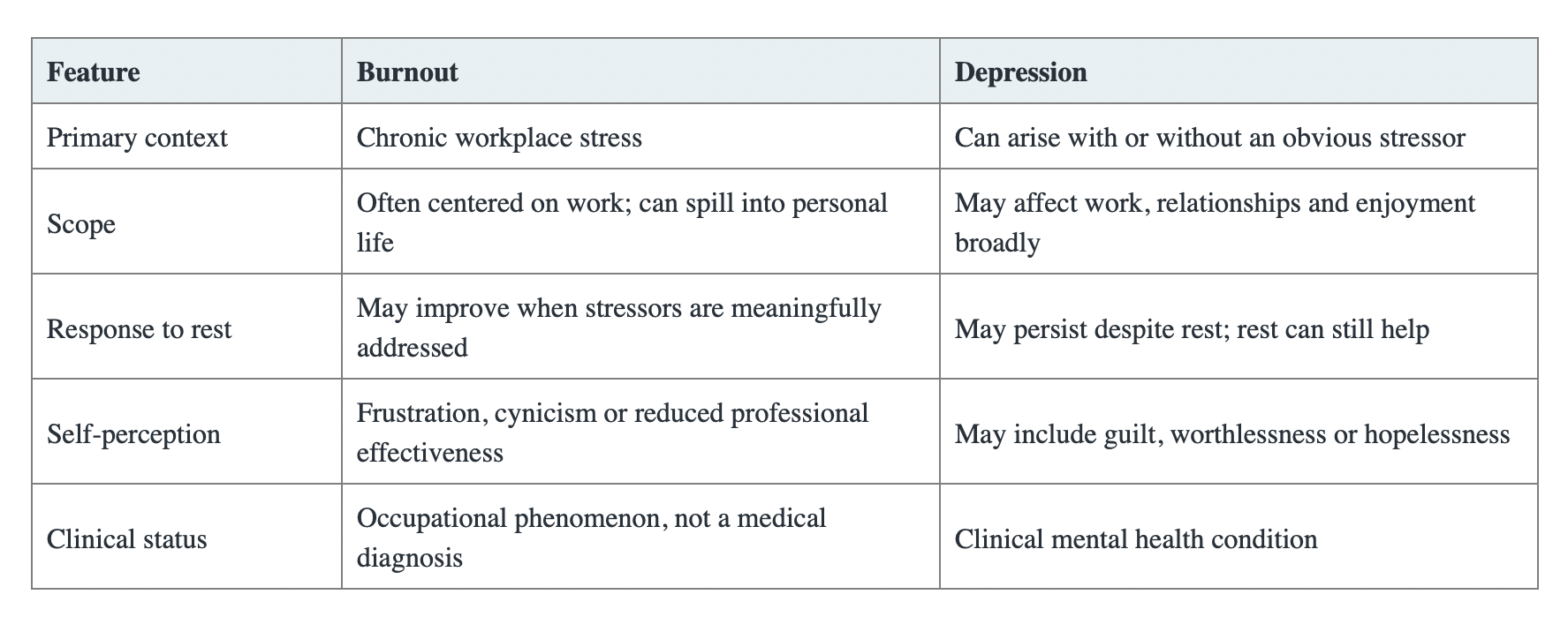
These patterns are general guides, not a diagnostic checklist.
A helpful comparison is how someone feels during time away from work. If a weekend or a change in responsibilities brings noticeable relief, that may point toward a strong situational component. If low mood or loss of pleasure remains across settings, depression may deserve closer attention. Neither observation proves a diagnosis: severe burnout can spill into home life, and depression can fluctuate with circumstances.
Can you have burnout and depression at the same time?
Yes. Burnout and depression can overlap, and prolonged stress may contribute to depressive symptoms. A person can feel depleted by work while also experiencing persistent low mood or loss of enjoyment in other areas of life.
This overlap matters because it can be tempting to explain every symptom as a consequence of a demanding schedule. Conversely, not every period of work-related exhaustion is clinical depression. A fuller picture includes duration, severity, functioning and the extent to which symptoms appear beyond the stressful setting.
How to tell which one you’re experiencing
Consider where the distress shows up, how long it has lasted and whether changes to your circumstances make a meaningful difference. These clues can be useful, but they are not a substitute for a professional evaluation.
For many of us, stress becomes so familiar that emotional exhaustion begins to feel normal. When productivity becomes identity, we can convince ourselves that things will improve after the next deadline or promotion, only to find that the goalposts have shifted once again.
It can also be difficult to recognize depression when we continue working, maintaining relationships and meeting responsibilities while privately struggling with hopelessness or disconnection. Remaining productive does not equal emotional wellness. If symptoms persist or interfere with your life, a therapist or other qualified healthcare professional can help you sort through what you’re experiencing.
It may help to ask yourself a few practical questions: When did these changes begin? Do they improve when the demands lessen? Have they affected your relationships, sleep or ability to enjoy ordinary experiences? Are you feeling frustrated with a situation, or have negative beliefs about yourself become more widespread? Writing down these observations can make a conversation with a healthcare professional more productive, without turning self-reflection into self-diagnosis.
When to talk to a therapist
You do not need to know whether you have burnout or depression before seeking therapy. Support can be useful whenever exhaustion, changes in mood or disconnection begin affecting your well-being, relationships or daily life.
Through a collaborative therapeutic relationship, you can explore sources of chronic stress, patterns in thoughts and behaviors and the expectations you place on yourself. When burnout is part of the picture, that may mean establishing boundaries or considering changes to unsustainable circumstances, not simply learning to tolerate them. When depression is involved, therapy may help you address negative beliefs, reconnect with meaningful activities and consider whether additional treatment would be beneficial.
If low mood or loss of interest lasts two weeks or longer, or symptoms are significantly affecting daily life, consider a professional assessment. If you are having thoughts of suicide or self-harm, seek immediate support; in the United States, call or text 988.
Therapy is not a substitute for fixing an unsustainable workplace. In some cases, the most useful work involves clarifying which demands can be negotiated, what support is available and whether larger changes are necessary. When depression is present, treatment may also include approaches that help someone reconnect with valued activities, examine persistent self-critical thinking or consider medication with an appropriate prescriber.
Burnout and depression are not always easy to distinguish. Ultimately, identifying the correct label is secondary to recognizing when our emotional well-being deserves greater attention. Whether you’re struggling with professional exhaustion or longing for the connection to life you once felt, understanding your experience can be a first step toward meaningful change.
If you experience thoughts of suicide or feel unable to stay safe, seek immediate help rather than waiting for a routine appointment. In the United States, you can call or text 988 to reach the Suicide & Crisis Lifeline. For less urgent concerns, an initial conversation with a therapist or healthcare professional can help determine the next step.
Frequently asked questions
Can burnout turn into depression?
Burnout and depression are distinct, but prolonged, unmanaged stress can contribute to depressive symptoms. Someone experiencing burnout may begin withdrawing from relationships, losing interest in activities or feeling persistently hopeless. Burnout does not inevitably become depression, however. If symptoms spread beyond work or continue even when demands lessen, a mental health professional can help assess what is happening.
How long does burnout last?
There is no fixed timeline for recovering from burnout. Some people feel better after changing their workload, setting boundaries or gaining more support. For others, recovery takes months, especially if the conditions that contributed to burnout remain in place. The duration depends on the stressors involved and whether meaningful changes are possible. A few days off may help without resolving the underlying problem.
Should I see a doctor or a therapist?
Both can help, and you do not have to choose only one. A medical professional can evaluate fatigue, sleep changes and other physical symptoms, consider possible medical causes and discuss treatment options. A therapist can help you understand emotional distress, explore ongoing stressors and develop ways to respond. If symptoms are persistent, severe or difficult to explain, coordinated care may be especially useful.
Sources and further reading
World Health Organization — Burn-out as an occupational phenomenon
